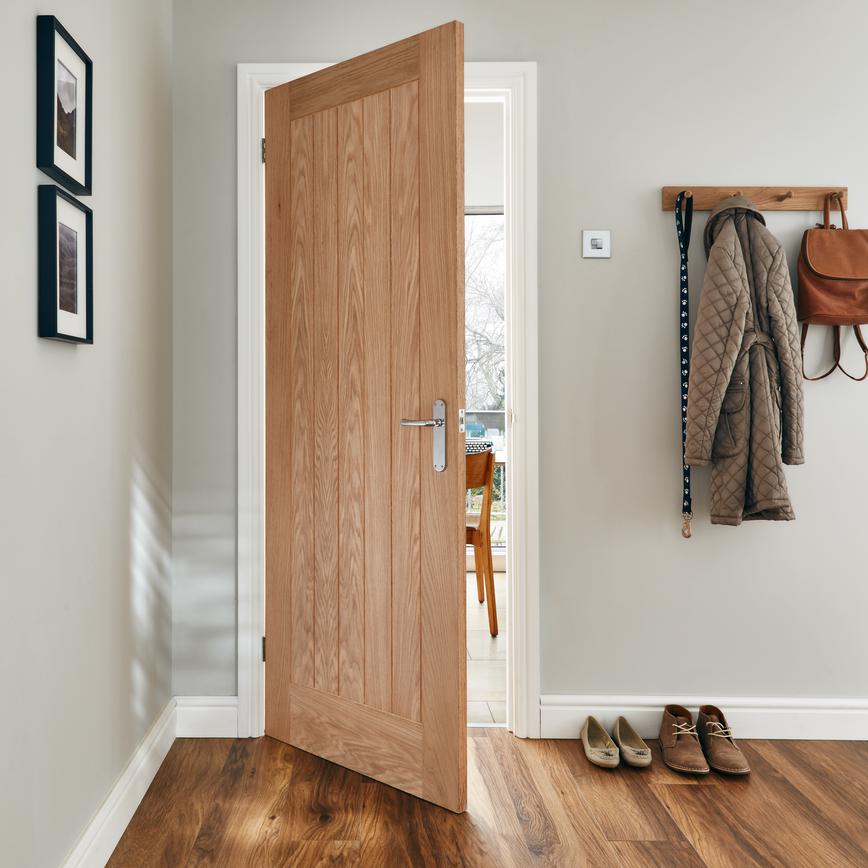
Can new internal doors be fitted to existing frames? In many homes, yes. If the frame is secure, reasonably square, correctly sized and compatible with the new door, a skilled fitter can often replace the door leaf without removing the lining and architrave.
The important word is suitable. Every opening needs to be assessed individually, especially in older properties where measurements, hinge positions and frame shapes often vary from room to room.
Most replacement projects start by checking the existing frames
Keeping a sound frame can reduce disruption and avoid unnecessary making good. Repair or replacement is recommended when the frame cannot support a safe, durable and well-aligned result.
- Each opening assessed separately
- Suitable door sizes confirmed first
- Frame issues identified before ordering
- Supply and fitting in one quotation
When can an existing door frame usually be retained?
Good signs
- The frame feels firmly fixed to the wall.
- There is no significant rot, splitting or movement.
- The opening is close to a readily available door size.
- Any variation can be handled within the door manufacturer’s permitted trimming limits.
- The stops, architraves and surrounding wall are serviceable.
- The chosen hinges and latch can be positioned securely.
Reasons more work may be needed
- The lining is loose, twisted or badly out of square.
- Timber around the hinge positions is damaged or weak.
- The opening is too narrow, wide or irregular for a suitable standard door.
- Previous alterations have left excessive hinge or latch recesses.
- Architraves, stops or nearby plaster are failing.
- The opening has a fire-safety requirement that the existing frame cannot satisfy.
How a fitter checks an existing frame
Measure width, height and thickness
Measurements are taken at more than one point because openings can taper. The fitter also checks the rebate, stops and the clearance needed above the finished floor.
Check square, plumb and twist
A frame can look straight while still leaning or twisting. This affects the gaps around the door and whether it swings open or closes by itself.
Inspect the fixing points
The hinge side must provide secure timber for the chosen hinge arrangement. Old recesses, splits and movement need to be considered before the new door is prepared.
Match the door to the opening
The correct door is selected from the measured opening, construction, weight and manufacturer’s trimming guidance—not simply from the label on an old door.
Confirm hardware and closing
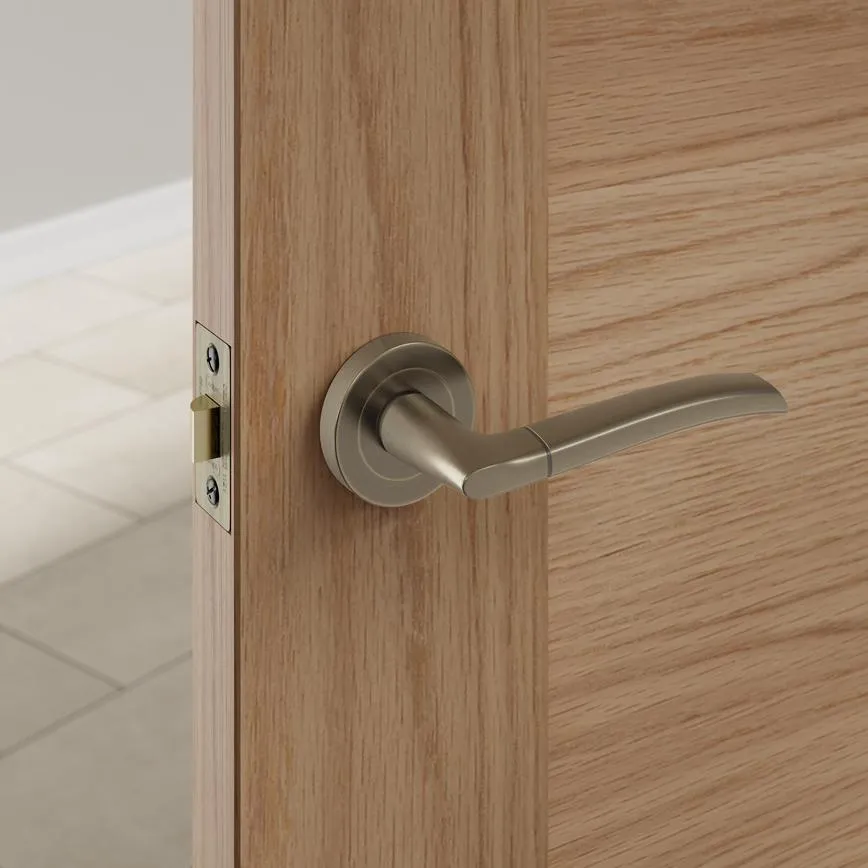
Hinges, latch, handles, any lock and the frame’s keep position are planned together so that the finished door closes smoothly and securely.
Unsure whether your frames are reusable? Send photographs of both sides of the opening, the hinges and any visible damage with your postcode and required door quantity.
Can the old door be used as a template?
The old door is useful reference information, but it should not be treated as a guaranteed template. It may already be a poor fit, the floor level may have changed, and the new door may have different hinge requirements or stricter trimming limits.
A professional fitter measures the frame and checks the new product independently. That matters particularly for veneered, glazed and fire-rated doors, where excessive trimming or unsuitable hardware can damage the product or conflict with the manufacturer’s requirements.
What if the frame is out of square?
Minor variation is common, especially in older homes. A fitter may be able to carefully size and shape a suitable door so the visible gaps are balanced and the door operates correctly. The amount that can be removed depends on the construction and the manufacturer’s limits.
If the frame is severely twisted, loose or too far from a suitable size, forcing a new leaf into it can create a poor result. The door may bind, reveal uneven gaps or lose too much material. Repairing or replacing the lining may be the better long-term choice, even though it increases the scope of work.
The quotation should separate a standard replacement-door installation from any frame repair, new lining, architrave or making-good work.
Do heavier oak or glazed doors need different hinges?
Door weight and construction influence hinge selection and quantity. A heavier engineered oak, glazed or fire door may need a different arrangement from a lightweight moulded door. The frame also needs sound fixing points that can support the chosen door and hardware.
This is one reason Grafton Carpentry’s supply-and-fit service confirms the product and installation together. The door, hinges, latch, handles and existing opening are treated as one working assembly.
Important: fire doors require a separate compatibility check
A fire door is not simply a heavier standard door. The leaf, frame, seals, gaps, hinges, latch and other components must be compatible with the relevant evidence and installation instructions. A new fire-door leaf should not be fitted into an existing frame merely because the dimensions appear to match.
Where fire performance is required, the opening and specification must be assessed for that purpose. See the fire door range and ask for project-specific advice.
Which internal doors work well in existing frames?
White moulded doors
A practical choice for coordinated replacements, subject to size, construction and trimming limits.
Oak doors
Heavier oak-veneered designs add natural character but need careful handling, suitable hinges and protected edges.
Glazed doors
Useful for moving light between rooms. Weight, glass design and privacy should be considered for each opening.
Compare likely installed budgets in the interior door fitting cost guide, then request a quotation based on your actual frames.
Existing-frame door fitting near Leicester
Grafton Carpentry supplies and fits internal doors in Leicester, Hinckley, Leicestershire and suitable locations across the surrounding Midlands. The service is designed for homeowners who want one company to help confirm the openings, supply suitable products and install them professionally.
Check the door fitting areas or send the postcode, number of doors, preferred styles and photographs. The team will confirm whether the location and project are suitable.
Existing door frame FAQs
Do I need new frames when replacing internal doors?
Not automatically. Many new door leaves can be fitted into sound existing frames. Replacement or repair may be needed if a frame is damaged, loose, badly distorted, unsuitable in size or incompatible with the required door specification.
Can a standard-size door be trimmed to fit an old frame?
Often, but only within the manufacturer’s permitted trimming allowance. Veneered, moulded, glazed and fire doors can have different limits. The opening and product must be checked before material is removed.
Can the existing hinges be reused?
Sometimes, but condition, size, position and load rating all matter. New hinges may be preferable or necessary for the selected door.
Will changing the frame damage the walls?
Replacing a lining and architraves is more disruptive than fitting a replacement leaf and can involve making good around the opening. The exact scope depends on how the existing joinery is fixed and the condition of the surrounding finishes.
Can a fire door use an existing frame?
Only where the frame and all associated components are confirmed as suitable and compatible with the required fire-door specification. Dimensions alone are not enough.
Find out whether your existing frames can be kept
Ask Grafton Carpentry for a supply-and-fit quotation. Include your postcode, door quantity, preferred styles and clear photographs of the frames so the team can identify the likely work before products are ordered.